
Signs & Symptoms Service
- Reviewed by: Dr. Kanchan Kaur
- Senior Director, Breast Services
- Cancer Institute, Medanta – the Medicity
Billions of tiny cells build the human body. These billion of cells follow an orderly way to grow and multiply. Our body produces these tiny cells only when new cells are needed. However, at times the orderly process of cell growth goes wrong. That time the cells begin to grow and multiply themselves uncontrollably. This condition leads to cancer, e.g. breast cancer.
Breast cancer is the most common invasive cancer in women and the second leading cause of cancer deaths in women. A recent study shows that 1 in 28 women in India is likely to develop this disease during their lifetime (Firstpost, Oct 15, 2020) . It was alarming to find that India had the highest death rates globally in 2017.
Over 2000 new women are diagnosed with cancer every day, and unfortunately 1200 are detected at the later stages. Such late detection of cancer reduces chances of survival by 3 to 17 times and increases the cost of treatment by 1.5 to 2 times, as compared to early detected cancers (The Times of India, Sep 24, 2017).
Like in lot of other types of cancers, in breast cancer also, the stage at the time of diagnosis happens to play an important role in survival chances of the patient. Patients who have been diagnosed with early stages of cancer are likely to have higher chances of survival, as compared to patients who have been diagnosed with advanced stage cancer.
According to studies, a person who receives treatment for stage 0 or stage 1 breast cancer has 99% chances of surviving for at least 5 years after being diagnosed. If a patient is diagnosed at stage 4 of cancer, the chances that the patient will survive another 5 years reduces to around 27%.

However, we must not underestimate the fact that a happy mindset & healthy lifestyle changes play a major role in recovery of cancer patients. Patients in later stages of cancer can also respond well to the treatment and their recovery can be better if they choose to stay positive and say Yes to Life!
It is important to note that these statistics are just averages, and each person’s chance of recovery depends on many factors, including the size of the tumour, the number of lymph nodes that contain cancer, and other features of the tumour that affects how quickly a tumour will grow and how well the treatment works. Therefore, it can be difficult to make an estimate about each patient’s chances of survival.
The most important and foremost step in fighting breast cancer is early diagnosis. With regular checks and screenings, one can detect breast cancer early.
The symptoms of breast tumours may vary from person to person. The symptoms may also vary as per the type of cancer. The Invasive Ductal Carcinoma (IDC) that forms in the milk ducts, for instance, may cause a distinct breast lump that one can feel. Whereas another type- Invasive Lobular Carcinoma (ILC) which forms in milk-producing glands may make the breasts tissues thicker.
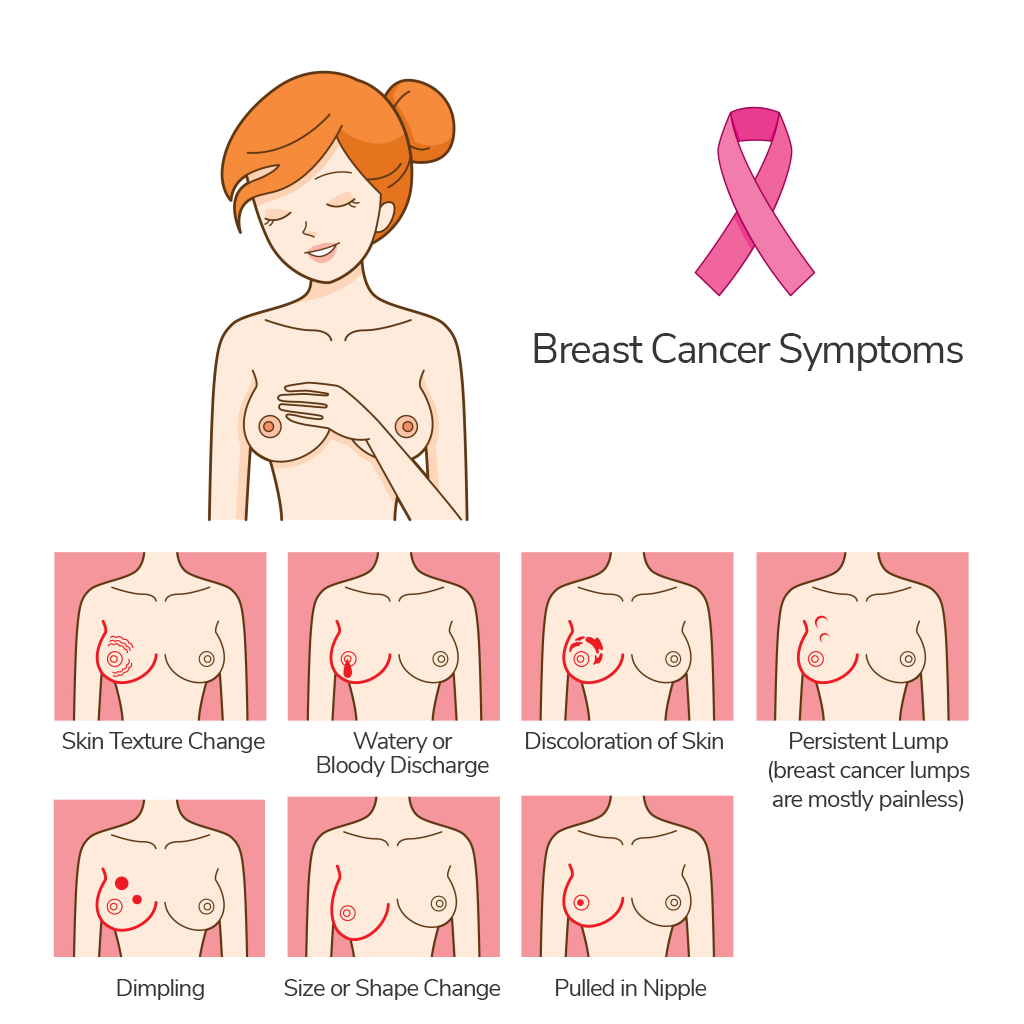
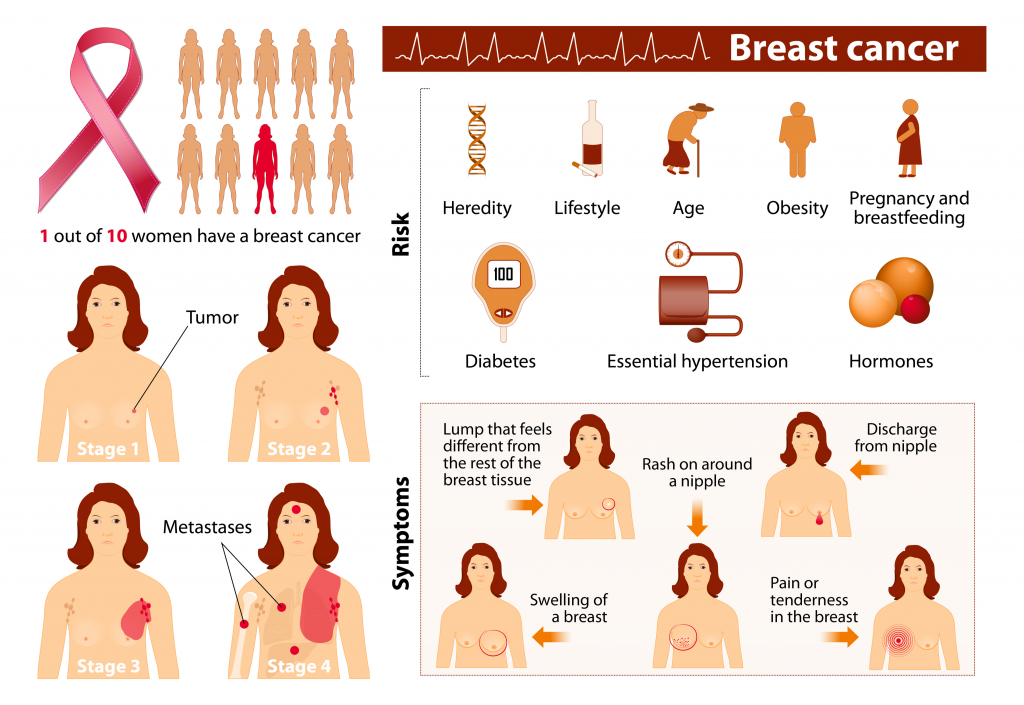
The following symptoms are early warning signs of breast cancer:
- Persistent lump in the breast or armpit area
- A change in the size or shape of the breast
- Inverted nipple
- A rash around or on one of the nipples
- Discolouration on skin of the breast
- Peeling, flaking or scaling of the skin on the breast or nipple
- Discharge from nipple, possibly bloody and watery in nature.
These symptoms may not necessarily mean cancer. If an individual notes any of these symptoms or any abnormality related to breast health, one should immediately visit a doctor for an examination.